Adam Gandy, Founder Smart Build Ltd
" ThermaSkirt is an excellent product. We used it on a barn conversion in preference to UFH. Looks great, works well and far cheaper to install!” "
Claire Jones
" I would just like to express my sheer delight in your product, your company and your staff. From start to finish the customer service has been spot on. The product is out of this world, it has reformed my house. The guys who installed it were two of the nicest guys, so professional. We are so so pleased. Thank you so much The Jones Family "
Tina & Gareth
"Everyone that's seen the place is blown away with your product. We're loving that we can place our furniture anywhere in the rooms now and don't have bulky radiators sticking out everywhere."
Suzanne
"I had Thermaskirt installed by Discrete Heat in my small cottage more than 9 years ago and have been very satisfied with the system and it's performance."
Christine Bentley
"Thermaskirt is better and cheaper to install than underfloor heating it is more convenient than radiators. I work in construction and I am always
telling others about thermaskirt heating."
Keith Ward
"The Thermaskirt system has more than met our expectations saving space and looking great."
Kay Harley
"I want to say a huge thank you and pass on some praise for your employees and the way they have sold, designed and delivered my project."
Mick Eley
"Every step of the way from the design phase, then delivery through to the after sales and technical support we have been so impressed with DiscreteHeat and would recommend ThermaSkirt to everybody."
Alan Littlehales
"It works superbly, looks fantastic, heats the room brilliantly with no cold spots, and is cheap to run, ThermaSkirt is win win win! "
Mr. Weissman
"ThermaSkirt installed quickly and looks great; we have much more useable space in the room now that we have removed the radiators and their covers."
Ian Johnson
"It's important to us to convey our appreciation to you all for your professionalism, the very high standard of your customer after care, and of course, the quality of your product, which is excellent."
Kevin
"it was a really customer friendly company to deal with which is a rare and pleasant experience these days.
I would have no hesitation recommending you to anybody."
Mark & Liz
"We just wanted to say a huge, huge thank you to you Lisa & Carl and everyone at Discrete Heat for all of your help and hard work with our new ThermaSkirt Heating System."
Barry C Brown
"I self-fitted Thermaskirt to my flat about six or so years ago, and it's been brilliant! It's the only heating I have ever needed and I've told countless people about it"
Mr & Mrs Carter
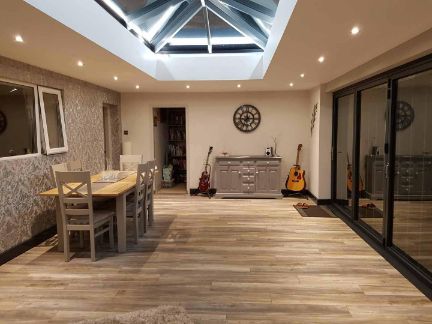
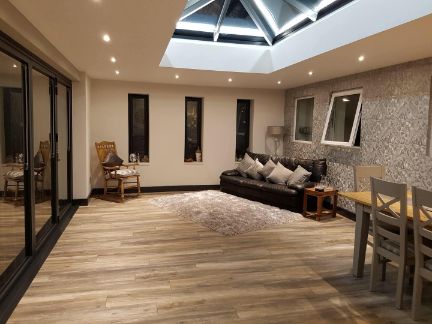
"I found it easy to install with the clear instructions. We have been really pleased with how neat it looks and it has certainly provided enough warmth even for an open plan dining room/sunroom. "